Crosslinking, Protein Conjugation
Homobifunctional PEG
- *
By Functional Group 1
By Functional Group 2
PEG Length
Application
Filtered by
Clear All
| Catalog No. | Name | Structure | M.W. | Purity | Buy |
|---|---|---|---|---|---|
| BPG-4564 | TCO-PEG12-TCO |

|
893.1 | 0.95 | |
|
BPG-4563
CAS: 116604-42-3
|
PEG2-bis(phosphonic acid) |
.gif)
|
278.1 | 0.98 | |
| BPG-4562 | PEG-bis-Succinimidyl Valerate, MW 3.4K-5K |

|
N/A | N/A | |
| BPG-4561 | PEG-bis-Succinimidyl Oxyglutaryl, MW 1K-20K |

|
N/A | N/A | |
| BPG-4560 | PEG-bis-SPDP, MW 1K-20K |

|
N/A | N/A | |
| BPG-4559 | PEG-bis-Nitrophenyl Carbonate, MW 1K-20K |

|
N/A | N/A | |
| BPG-4557 | PEG-bis-amido-Succinic Acid, MW 1K-20K |

|
N/A | N/A | |
| BPG-4556 | Bis-propargyl-PEG, MW 1K-10K |

|
N/A | N/A | |
| BPG-4555 | Bis-PEG-TFP ester, MW 5K |

|
N/A | N/A | |
| BPG-4554 | PEG-bis-CH2CO2H, MW 1K-20K |

|
N/A | N/A | |
| BPG-4288 | PEG-bis-Hydrazide, MW 3.4K |

|
N/A | N/A | |
| BPG-2858 | SCM-PEG-SCM, MW 2k-7.5k |

|
Customizable | N/A | |
| BPG-2848 | NHS-PEG-NHS, MW 1k-4k |

|
Customizable | N/A | |
| BPG-2648 | Mal-NH-PEG19-NH-Mal |

|
1199.34 | >97% | |
| BPG-2616 | NHS-PEG16-NHS |
|
1061.14 | >95% | |
| BPG-2583 | NHS-PEG12-NHS |
|
884.92 | >95% | |
|
BPG-2578
CAS: 2226897-74-9
|
Bis-PEG17-acid |
|
866.98 | >95% | |
|
BPG-2571
CAS: 854753-78-9
|
Mal-NH-PEG11-NH-Mal |
|
846.92 | >97% | |
| BPG-2495 | THP-PEG12-THP |

|
714.44 | >95% | |
|
BPG-2480
CAS: 2225903-66-0
|
Bis-PEG13-acid |

|
690.78 | >95% |
Background
Homobifunctional PEG refers to a multifunctional polymer with the same functional groups attached at both ends of the PEG, and is distinguished from heterobifunctional PEG by the consistency of the functional groups attached at both ends. Homobifunctional PEG acts as a connector or spacer molecule, providing a bridge between different biomolecules or surfaces. Its unique properties, such as biocompatibility, hydrophilicity, and low immunogenicity, making it an excellent choice for a variety of applications in the life sciences. BOC Sciences offers a wide range of homobifunctional PEGs with functional groups such as alkynes, biotin, azides, epoxides, Mals, and more, providing a wide range of possibilities in biotechnology and drug delivery.
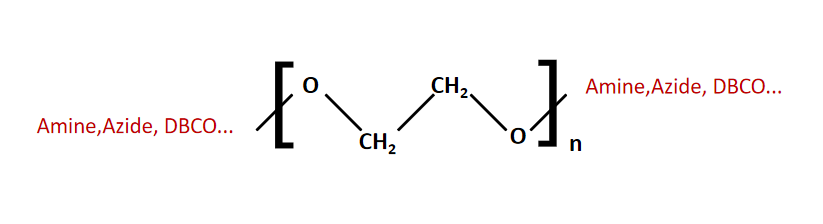 Fig. 1. Structures of homobifunctional PEG.
Examples of Homobifunctional PEGs
Alkyne-PEG-Alkyne
Alkyne-PEG-Alkyne are bis-alkyne derivatives with two alkyne (ALK) groups that can be used to modify proteins, peptides, particles and other materials. Polyethylene glycol derivatives increase drug solubility and stability, reduce peptide immunogenicity and have good biocompatibility.
Biotin-PEG-Biotin
Biotin-PEG-Biotin contains biotin at both ends of the molecular chain. Streptavidin and avidin bind to linear PEG via a stable amide linkage with high affinity and specificity. It can be used on the surface of biotinylated biomolecules or other materials. The polyethylene glycol attached to the biotin forms an extended spacer arm that allows the biotin to enter the binding pocket of the protein. The biotin/streptavidin binding assay can easily detect biotin and is widely used for molecular target detection.
NHS-PEG-NHS
NHS-PEG-NHS is an amino (-NH2) reactive PEG derivative that can be used to modify proteins, peptides or any other surface.
Applications of Homobifunctional PEGs
Drug Delivery
The solubility, stability and pharmacokinetic properties of homobifunctional PEGs can be enhanced by combining them with drug molecules or carriers. Polyethylene glycolization of drugs can increase their bioavailability, reduce immunogenicity, and prolong in vivo circulation time, thus enhancing therapeutic efficacy.
Protein Engineering and Modification
Stability, solubility and resistance to proteolytic hydrolysis can be improved by attaching homobifunctional PEG to proteins or peptides. Polyethylene glycolization of proteins enhances their therapeutic potential, extends their half-life and reduces their immunogenicity, making them suitable for a variety of biomedical applications.
Surface Modification
By binding homobifunctional PEG to surfaces such as nanoparticles, microarrays or biosensors, it is possible to enhance stability, minimize non-specific interactions and improve biocompatibility.
Advantages of Homobifunctional PEG
- Biocompatibility: Homobifunctional PEG is highly biocompatible, meaning it is well tolerated by organisms and has minimal toxicity.
- Hydrophilic: Homobifunctional PEGs are hydrophilic, which allows the PEG to enhance the solubility of hydrophobic drugs or biomolecules, improving their bioavailability and facilitating their delivery to the target site.
- Reduced Immunogenicity: The use of homobifunctional PEGs can reduce the immunogenicity of a bioconfiguration or protein-based therapy, a property that is particularly beneficial for prolonging the circulation time of a drug or protein in the body.
- Enhanced Stability: Homobifunctional PEGs can improve the stability of a conjugated molecule or protein.
- Versatility: Homobifunctional PEGs are versatile tools that can be customized to meet specific requirements. The length of the PEG chain and the choice of functional groups can be adjusted to achieve the desired properties and optimize the desired application.
BOC Sciences offers high-quality homo-bifunctional PEG products based on expertise and experience, and provides technical support for these products. If you are interested in our products, please feel free to contact us.
Planning to purchase or looking for custom solutions?
Get in touch with our experts today! We'll respond within 24 hours to discuss your project needs and provide a customized quote.
You May Also Be Interested In
From custom PEG synthesis to PEGylation support, explore tailored services designed to meet the specific needs of your research.
Gain Deeper Insights
Browse related content to gain a deeper understanding of PEG synthesis and manufacturing.
PEG and PEG Derivatives
-

-

PEG Derivatives by Functional Groups
Bioconjugation, Custom Synthesis
-

Crosslinking, Surface Coating
-

Bioconjugation, Surface Modification
-

Precise Conjugation, Uniformity
-

Click Chemistry, Hydrogels
-

Thiol Coupling, Conjugation
-

Controlled Synthesis, Protection
-

Nitrophenyl carbonate (NPC) PEG
Protein Modification, Coupling
-

PEGylated Hyaluronic Acid (HA)
Targeting, Tissue Engineering
Online Inquiry